
A personal starting point
Battaglia opens with his own background and why energy independence became personal to him.
Book feature
A book about energy independence, solar plus storage, and why microgrids represent the next step beyond utility dependence. Real control, the founder argues, begins when you stop asking for permission.
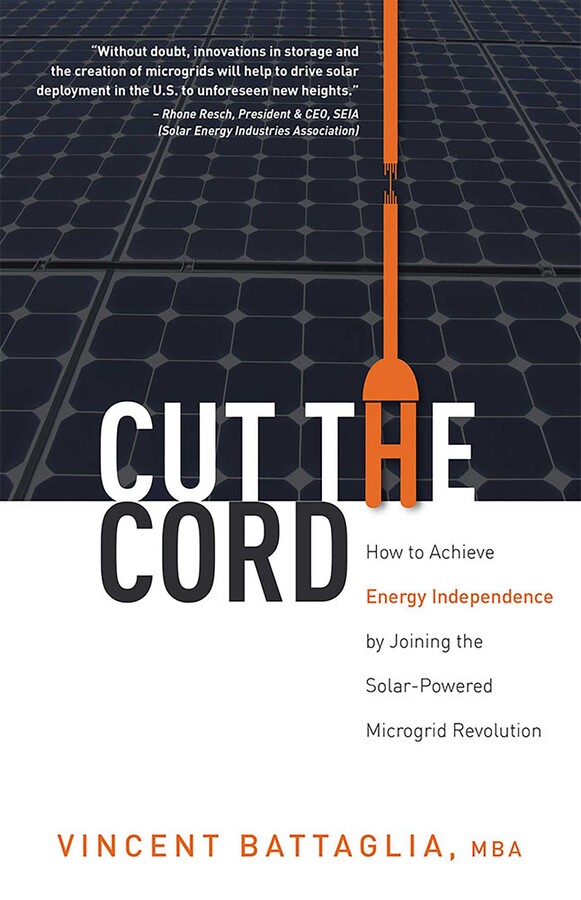
A look at the book's voice, structure, and the arguments it builds from the first page.
Battaglia opens with his own background and why energy independence became personal to him.
The early chapters argue that utility-controlled energy is outdated and too restrictive for where things are heading.
Solar is useful, but the book makes the case that true independence depends on storage and control.
It defines microgrids as stand-alone, stored-energy systems powered by renewables, especially solar PV.
Core ideas
The case is consistent throughout: the utility model is too limiting, solar is real and practical, storage matters, and microgrids are the more complete path to independence.
Solar is a better alternative than depending on the utility grid, but it is still only part of a larger shift.
Real independence comes from the ability to store and manage energy locally, not just generate it.
Microgrids are stand-alone energy systems built from renewables and storage, not just roof panels.
The founder's take
In his own words, Battaglia frames where energy is actually heading — and why a solar panel alone no longer tells the whole story.
Most people still think solar is about saving money on a utility bill. The founder argues that mindset is already outdated.
The future of energy, the book argues, is local, sovereign, and utility-independent — not rented from a monopoly.
Mycrogrid systems are not just a technology shift. They are the beginning of the decentralization of the utility industry.
Why it's here
Cut the Cord is the thinking behind the company. It is part of the broader mission, not a separate novelty product.
The book lays out the case for local control and energy independence that the whole company is built around.
It connects the dots from Renova Solar to Renova Energy to the Mycrogrid you see today.
It walks you from panels alone to storage, microgrids, and a system that works closer to home.
Read a sample
A live preview of Cut the Cord, straight from Google Books. Turn the pages, then grab your own copy below.
Open an in-page preview of the book.
Loads the reader from Google Books, which may set Google cookies.Get the book
Cut the Cord ships to your door, streams on Audible, or is yours free in person at the Mycrogrid office in Palm Desert.
Order the print edition and have it delivered straight to your door.
Order PublisherBuy direct from the publisher in print or digital editions.
Order AudiobookStream or download the audiobook for the commute, the gym, or the job site.
Listen Free in personCome by the Mycrogrid office at Cook & Hovley and Vincent will personally hand you a free copy — no catch, no pitch.
Visit