Monitors 24/7
Watches your microgrid around the clock instead of leaving you to read graphs.
Originally Renova Energy
Mycrogrid carries the Renova Energy legacy into a sharper future: solar, storage, monitoring, and service designed as one local energy system — true energy independence.
Why Mycrogrid exists
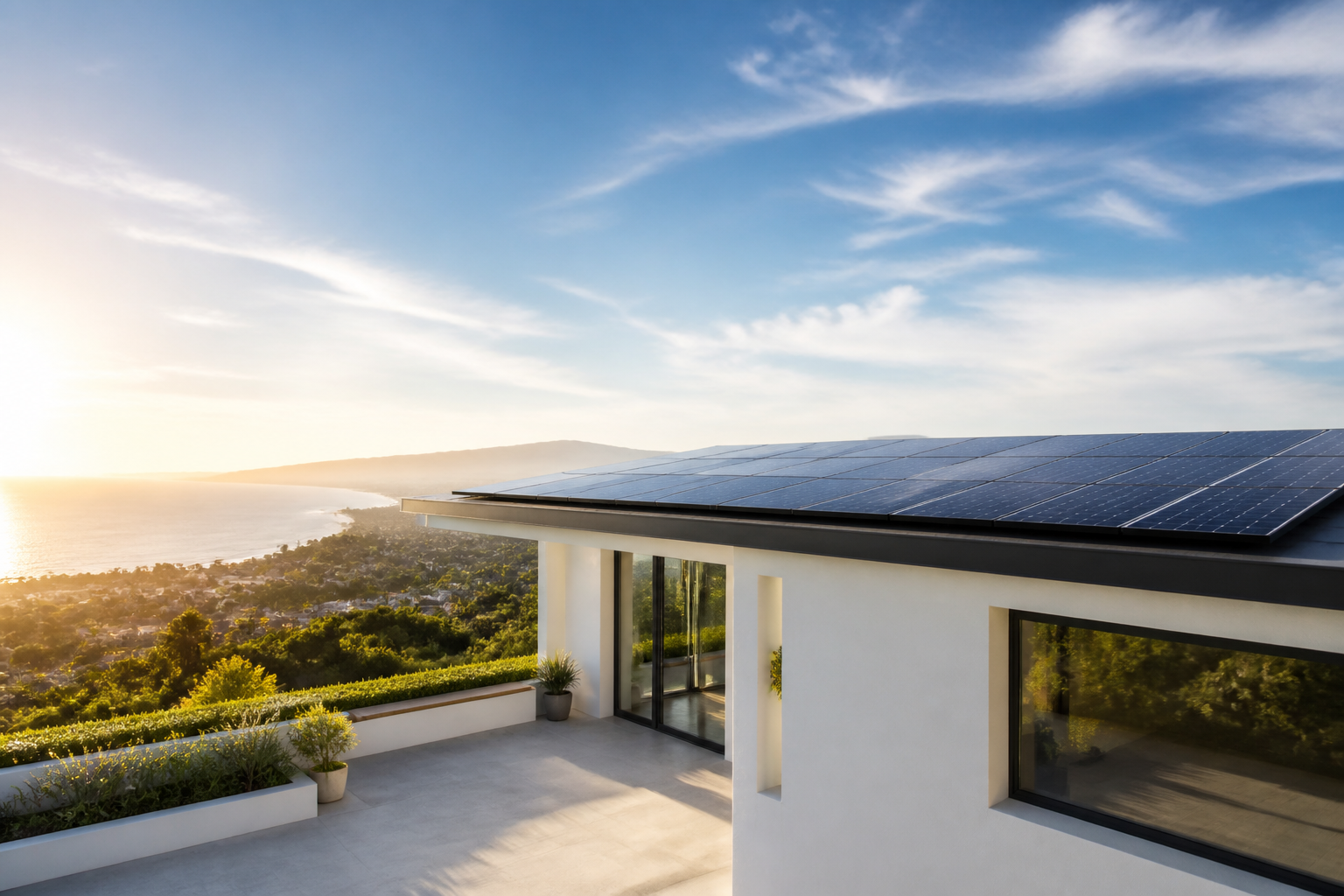
Mycrogrid is for people who want more than a panel installation. We focus on how the system behaves once it is on your property, including the Mycroguard software layer that helps you monitor and manage it.
Mycroguard
Mycroguard is the software side of Mycrogrid: proactive, 24/7 monitoring that diagnoses issues remotely — often before you even know there's a problem — alerts you, and helps coordinate the fix before small issues become big.

The protection layer for customer-specific microgrid systems: monitoring, service context, and operational visibility under one brand.
Watches your microgrid around the clock instead of leaving you to read graphs.
Catches and diagnoses issues remotely — often before you even know there's a problem.
Alerts you and lines up the Mycroguard team before small issues become big.
Here is why Mycrogrid exists, before we ever ask you for a call or a form fill.
Solar is the starting point. It puts a generator on your roof and begins your move toward a more independent energy system.
Batteries let your home store, control, and use energy on its own terms instead of pulling everything from the grid.
Panels alone are not the whole answer. The destination is a microgrid you actually control.
We want you to understand how the system works before you ever talk to us about buying one.
Mission notes
The new name gives us room to talk about where the business is actually headed: microgrids, local control, Mycroguard software, and systems that do more than stay tied to the utility.
We move you away from forced grid dependence and toward a system designed to work locally.
A microgrid makes solar more useful by generating, storing, and managing energy right at your property.
Every system is designed so you decide when, where, and how your energy gets used.
Mycrogrid era
Everyone thinks the EV revolution is about cars. It isn't. The same investment driving battery density higher — more capacity, longer life, lower cost — won't just power your car. It will power your home, and that's what makes the Mycrogrid era possible.
The same wave of EV investment driving down battery costs is what makes home storage more capable and affordable.
This is about more than generating electricity. It is about controlling when, where, and how energy is used.
The destination is energy sovereignty: homes and businesses that produce, store, and control their own energy with less reliance on the utility.
Phase shift
The progression is simple: generation first, storage second, sovereignty last.
Solar proved that households can generate power on-site. That was the first step, not the finish line.
Storage is the next layer. It turns generation into independence and gives you control over when power is used.
The long game is not solar alone. It is homeowner-owned energy infrastructure built around local control and resilience.
HELOC Pricing
A HELOC can fit a microgrid project in a few different ways. Here is how each one works, without pretending every lender or rate is the same.
Fund the full system from your HELOC so the installation moves in one clean step.
Cover part of the project in cash and use the HELOC for the rest or for later upgrades.
Start with the core solar array and draw on the HELOC later for battery storage or added equipment.
Everywhere else you can dig into the tools, the book, pricing, and proof.
Design your own solar system before you talk to us.
Open Page 2A clear side-by-side page for the purchase decision.
Open Page 3Book page for Vincent Battaglia and the independence story.
Open Page 4HELOC planning and financing options for a microgrid project.
Open Page 5Customer feedback and proof from real projects.
Open